
51jobDeepSeek前7月营收4.75亿元,较2025全年增长9倍_我的网站
A | 据两名知悉该公司财务数据的人士透露,2026年前7个月,DeepSeek实现营收约4.75亿元人民币(折合7070万美元),约为其2025全年营收的十倍(即增长9倍)。两位知情人士补充称,今年1‑7月DeepSeek净亏损约7.15亿元人民币,而2025全年净亏损为9.35亿元。公司正与现有投资人及新投资人就本轮融资展开磋商,计划募资500亿元人民币,目标估值5000亿元人民币。(新浪财经)原文链接。
B | 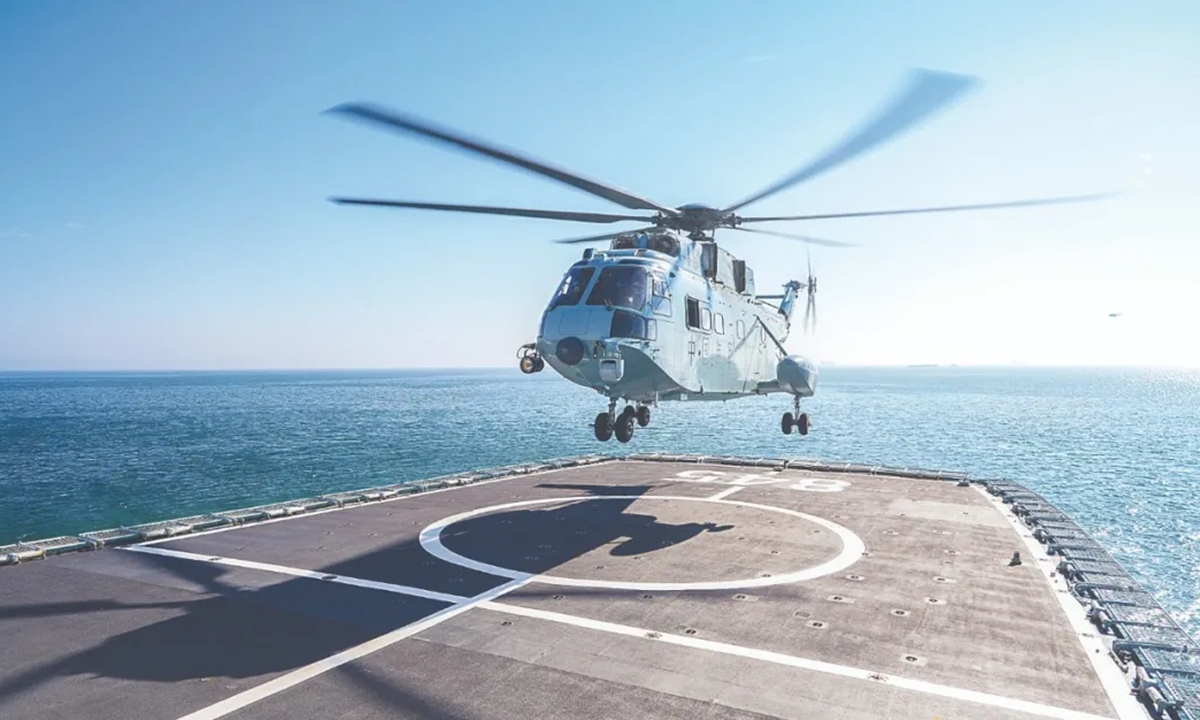 The progress of female pilot training is an important indicator of the maturity and systemization of the shipborne aviation talent selection and training system, a military affairs expert said. Smears by some foreign media about China's pilot training capabilities are, in essence, a projection of the West's own anxieties over talent shortages, the expert added. "Night landings are tougher than I imagined. The entire sea is pitch black. It's hard to tell where the sea ends and the sky begins. It's very easy to become disoriented," said Han Meng, a female trainee pilot at the Naval Aviation University, in the CCTV News video. "Completing today's landing mission has given me a clearer understanding of my own abilities. I'm about to graduate, and I feel more confident about heading to my post and carrying out various maritime and far-sea missions I'll be assigned," she added. The CCTV News report showed that the assessment featured a Z-8 helicopter landing on the aft flight deck of a vessel. CCTV reported on Friday that the first batch of female shipborne pilot trainees had all recently passed their daytime shipborne landing qualification assessments. Shipborne landing is a critical milestone in a shipborne pilot's development, often described as the "certificate" to real naval aviation. Passing this assessment marks a significant step in the PLA Navy's efforts to cultivate female shipborne aviation talent. All pilot trainees, regardless of gender, must meet the same rigorous physical and psychological standards required for shipborne aviation. The successful qualification of these female trainees demonstrates that the selection and training systems are capable of identifying and developing top-tier talent based on capability, not gender, Zhang Junshe, a Chinese military affairs expert, told the Global Times on Sunday. In recent years, the PLA Navy's shipborne aviation talent development has entered a new phase of system-of-systems operations, transitioning from "able to fly and land on ships" to "able to fight and operate jointly," PLA Daily reported on April 22. Under the synchronized training objectives of developing pilots, combatants and commanders, new pathways for talent cultivation are being explored, including growth opportunities for shipborne fighter and helicopter pilots. Training programs are being optimized across all elements, support resources coordinated across all domains, and implementation advanced across all processes, forming a systematic, integrated talent development framework. Zhang also mentioned that foreign media outlets have hyped claims of a "pilot shortage" in China or that "talent development cannot keep pace with equipment delivery." Such claims are largely based on selective data comparisons and misunderstandings of China's aviation development, essentially reflecting the West's own anxieties about talent. First, foreign media outlets often simply compare the total number of licensed pilots in China with that of the US, ignoring differences in population size, the prevalence of aviation culture and historical development. China's nationwide selection process draws from a vast pool of candidates, ensuring high overall pilot quality and building a strong reserve of aviation talent, Zhang noted. In July, the PLA Navy's 2026 pilot recruitment process was successfully completed. The average college entrance examination scores of admitted pilot trainees reached a record high. In recent years, through extensive outreach and publicity campaigns, enthusiasm among young applicants has continued to grow, with the recruitment pool expanding year by year. The Navy's recruitment authorities have established carrier-based flight aptitude assessment platforms, introduced new testing technologies including virtual reality and biofeedback, and improved the comprehensiveness and accuracy of flight aptitude evaluations, said the PLA Navy. Meanwhile, China has established a diversified training system encompassing academy training, airline-commissioned training and civilian supplementary pathways. Through general aviation development, China is expanding its civilian talent reserve and gradually narrowing the gap with leading aviation nations, the expert said. Moreover, modern air warfare is a complex system undertaking, relying not only on the number of pilots but also on comprehensive system-of-systems support across strategic early warning, electronic warfare, command communications and ground maintenance. The leapfrog development of China's aviation equipment is built on overall improvements in comprehensive national strength and the aviation industrial system, rather than a simple linear increase in pilot numbers, Zhang added. 。 Current article:http://youe.yuejinhuapennuochoudengying.cyou/news/20260826_90012.html Published on:12:15:09 |

